Access Control in Mountain View
Priced after the doors are walked. Electric strikes, keypads and readers for suites and small offices, and on every leaf a mechanical override cylinder left working and keyed to a key that exists.
4.9 / 5· 198 reviews from Mountain View and the mid-Peninsula
custom quote
Typical price
18 min
Avg. arrival
24/7
Availability
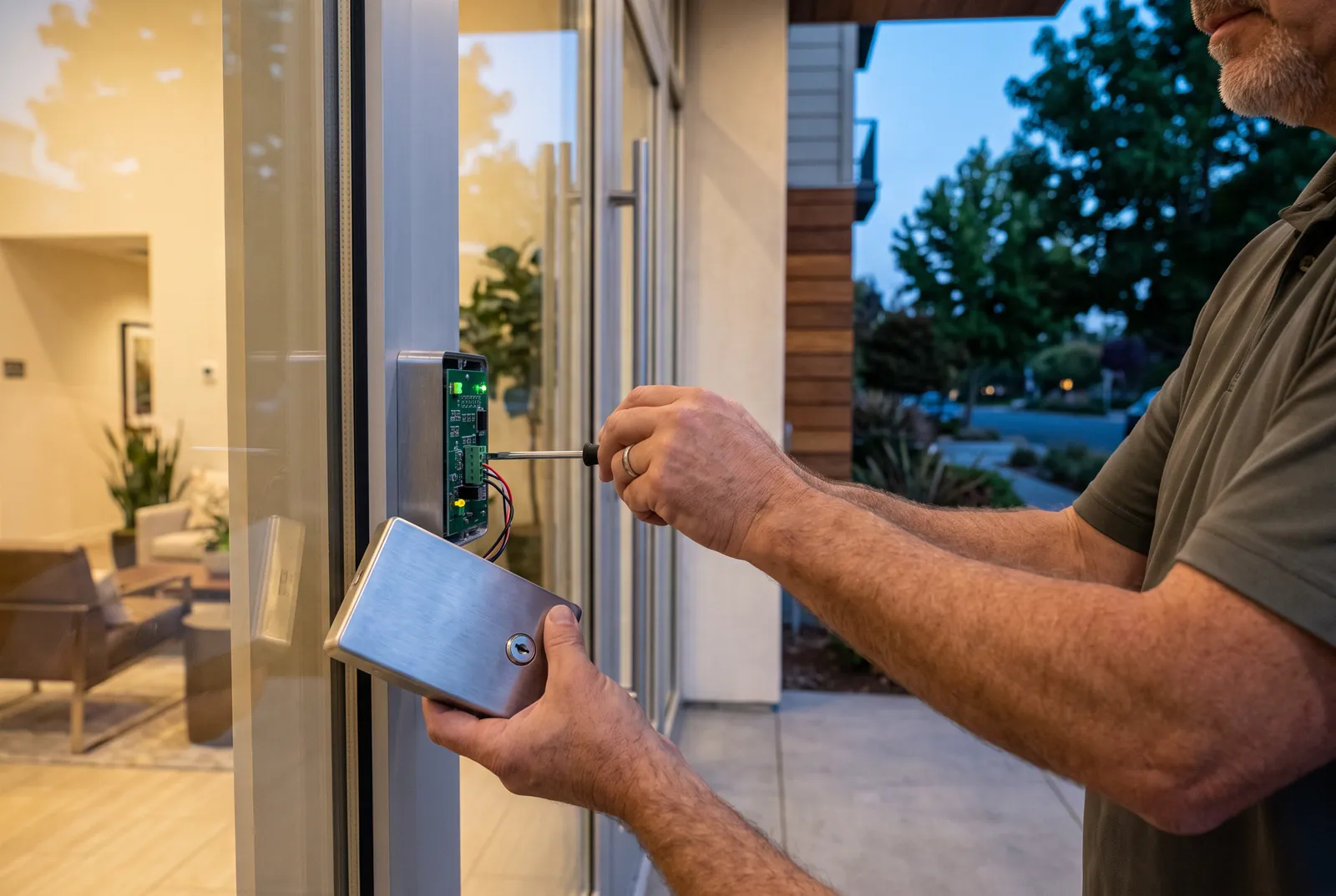
A key cannot be taken back once it has been handed out. A credential is switched off from a desk on a Sunday evening. Everything on this page sits on that one difference, and it is an administrative argument far more than a security one. In most of the newer buildings here that argument was settled before anyone moved in, and the doors already read a fob.
What this page covers is the door end: keypads and readers, electric strikes and magnetic locks, exit sensors and release buttons, the hardware they sit on and the wiring at the opening. Two things it does not cover, said plainly rather than discovered later. Work is not sold against the name of anybody else's controller, intercom or app, and where a building already runs a system, the credentials on it are issued and canceled by the company managing that building, not by a locksmith. Our half of such a building is mechanical, and it is usually the half that has been left alone longest.
The survey walks each door and writes down three things: what the door is made of, what hardware it carries now, and how far the nearest power and network points sit. Those three answers choose the hardware rather than a catalog. A wooden or hollow metal door with a deep frame takes an electric strike. An aluminum and glass front with a stile too narrow for a strike takes a magnetic lock at the head, with a motion sensor above the door and a release button beside it. A vehicle gate connects to the operator it already has rather than getting a new one. The controller is sized with two spare positions for the doors added later, and the credential is whatever your people will actually carry.
One door in every building keeps a mechanical cylinder on a restricted key, and that is a design decision rather than an admission of doubt. A building with no metal key anywhere is one outage away from standing on the sidewalk, and that is the whole argument this shop makes about the entrances in this city. Electronics run the building. Something still has to open the door on the morning they do not.
The trade line is the same one that runs through the rest of this site. Readers, strikes, magnetic locks, exit sensors, controllers and credentials on a system we install are ours. Fire panels, alarm systems and gate motors are not. Access control is quoted per project after the walk, itemized door by door with hardware, controller, credentials and labor on separate lines so nothing hides in a lump sum. The $89 survey counts toward the job. After approval the quote holds, and a door that turns out to need new preparation is explained and agreed as its own line rather than appearing on the invoice. Ninety days on the workmanship.
“Electric strike and a keypad on our suite door, quoted after the guy walked it. The override cylinder actually has a cut key now.”
All sixteen jobs are printed here, fourteen with ranges and two quoted once the doors have been counted on site. What moves a figure inside its range is which door it is and how it opens. One cylinder on a house in the old part of town takes the low end. A door that reads a credential, with a mechanical cylinder under the panel that has not been turned in years, takes the time that cylinder has been owed. Say which door stopped you and the range closes to one figure.
- Daytime (7am–8pm)standard rates
- Evening (8pm–12am)+$52
- Overnight (12am–7am)+$92
FAQ
Access Control: quick answers
A resident lost the fob for our building. Can you make another one?+
No, and that is worth hearing on the phone rather than after a trip. The fob is a line on the list held by the company managing the building, and only that desk can add one or switch one off. What can be done at the same address is the mechanical side: the cylinder under the reader serviced or repinned, keys cut, a door opened when a reader is down. Who orders that is settled on the call between you and the building.
Every move-out costs us a set of keys. Does this end that?+
For that one problem, yes. Switching off a credential takes under a minute, where a key that never came back means repinning every cylinder it turned. Where residents change on a regular cycle the arithmetic points to readers on the doors that carry traffic and keys on the rest. Putting a reader on every door in the building is not worth what it costs.
Do we give up keys entirely?+
No, and you should not want to. At least one door keeps a mechanical cylinder on a restricted key. Power goes out and boards fail, and a building with no mechanical route in is a lockout waiting for a bad morning. That cylinder also has to be serviced now and then, which is the part that gets forgotten.
Related
More commercial services
Open 24 hours, 7 days
Say what the door reads, and the rest of the call is short
Mountain View and the mid-Peninsula, at any hour. A fob, a card, a code or a plain key, and how many doors stand between the sidewalk and you — that decides the work, and the work decides the number. The number comes back on the same call with the $89 call-out and the clock already inside it, and it is the number on the receipt. The labor carries 90 days, in writing.