Mountain View neighborhood · 24/7
Old Mountain View: Castro Street storefronts, small offices up a stair, and blocks behind them where a plain cylinder is still the whole arrangement
The oldest square of the city around Castro Street: aluminum storefronts with closers overhead, studios and small offices on the second story reached by a street door and a stair, and short residential blocks behind the row where a front door carries a knob, a deadbolt and nothing else. Twelve minutes, the shortest run on this map.
4.9 / 5· 198 reviews from Mountain View and the mid-Peninsula
~12 min
Avg. arrival
$89
Service call
24/7
Availability
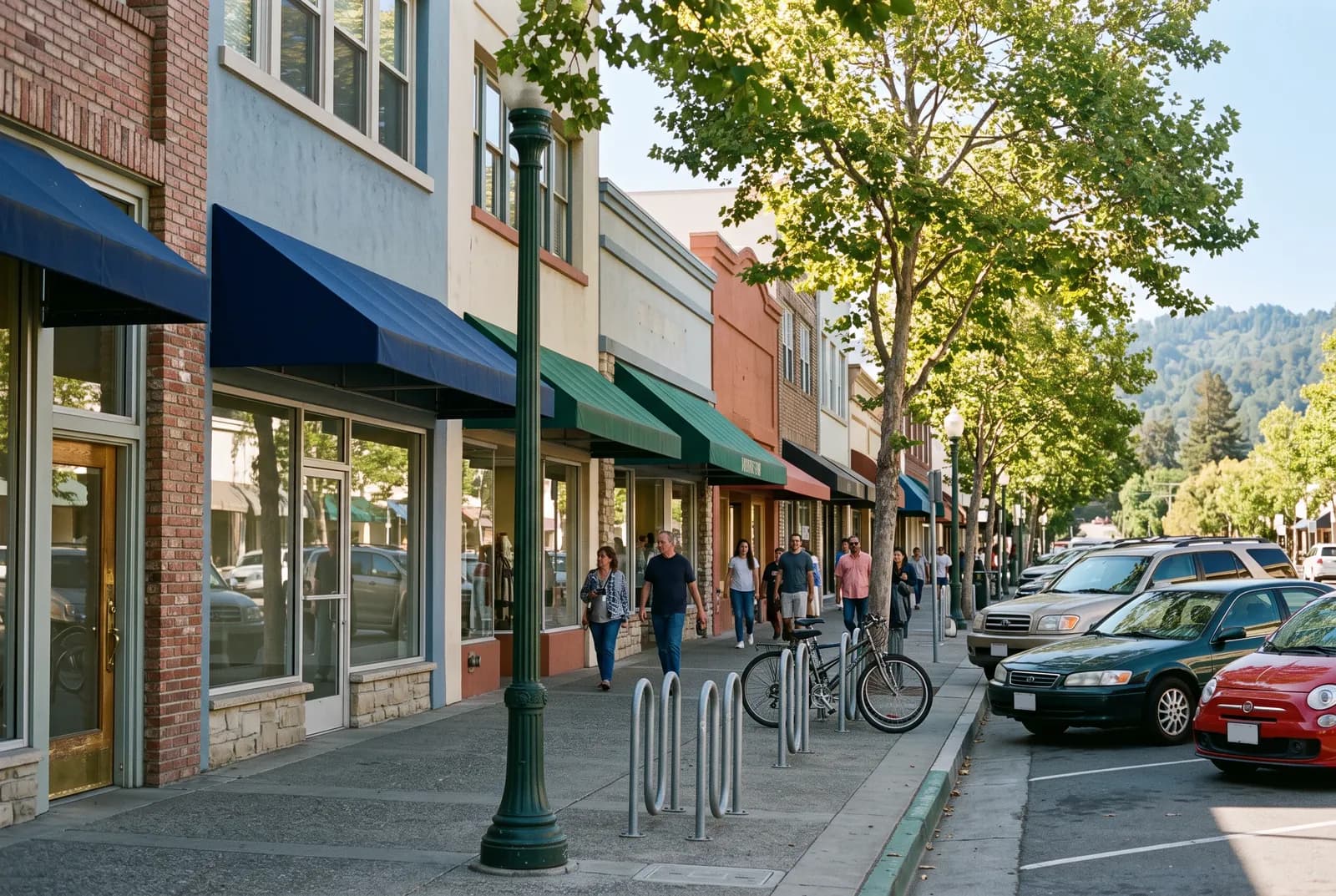
Downtown is the part of Mountain View where a key still does everything. Two miles north a resident touches a fob to a lobby door, again at a garage gate and again at a package room before reaching an apartment. Here a shopkeeper puts a key into a mortise cylinder, turns it twice, and that is the entire system. The blocks behind the row work the same way at a smaller size: a keyhole in the middle of the knob, a deadbolt above it, a back gate with a padlock that has hung there longer than the tree beside it. None of that is out of date. A cylinder that turns cleanly is worth keeping, and repinning one at $32–$50 per cylinder retires every key ever handed out while leaving the lock exactly where it is. The second and third cylinders sit at the low end, because the van is already at the curb.
The commercial doors are the other half of the work here and they run on their own clock. An aluminum storefront carries a narrow stile lock, a hook bolt that reaches into the jamb and a closer above the head, and the three of them age at different speeds. What people notice first is the closer, because the door starts resting a hand's width open after the last customer leaves. What has usually failed is the bolt, which stopped reaching its keeper months earlier and has been helped along with a shoulder ever since. Storefront door locks are $168–$495 per opening and a business lockout is $148–$272, both with the $89 service call already inside the number rather than waiting at the end. These calls land at closing time, so the evening rate between eight and midnight comes up often. It is +$52 and it is inside the figure you agree to on the phone.
Above the shops there are studios, small offices and a few apartments, reached by a street door and a flight of stairs. That street door belongs to the building rather than to any one tenant, so when it needs work the question of who orders it is settled on the call. It is a conversation between the tenant and whoever runs the building, and it usually takes one short message. After that the work is ordinary. Where several tenants share a stair, a landing and a back door onto the service lane, a master key system is what stops four keys living on every ring. It carries no published range because there is nothing to publish: somebody has to climb the stair, open each door and see what is in it before a chart can be drawn, and the chart is what the price is made of.
The last steady thing downtown is car keys. Parking here runs to a structure, a lot behind the row and diagonal spaces along the street, and cars stand there through a dinner and a movie. Keys get shut inside with a coat on the back seat, and a fob carried in a pocket for four years picks a Friday to stop being heard. A car lockout is $112–$208, a fob programmed at the curb is $98–$208, and a key cut and coded from nothing when the last one is gone is $163–$438. Say which level of the structure you are on, or which corner you are nearest to on the street, and wait at the car. A walk of one block to meet the van costs more minutes than the whole drive over.
Say which door stopped you: a storefront onto the sidewalk, a rear door onto the service lane, the street door to an upstairs stair, or a house door on one of the blocks behind the row. For a shop, the time you lock up is worth saying, because it settles whether the evening rate applies. For a car, give the corner or the level of the structure, plus the make, model, year and color.
Most requested in Old Mountain View
Nearby
Over the hill, the same van
FAQ
Asked about Old Mountain View
Our shop door sits a few inches open after the last person goes out.+
That is the closer giving up at the end of its travel, and it matters because a door that does not close cannot latch. The closer gets adjusted or replaced, and the latch is checked in the same visit, since a bolt that no longer reaches its keeper is often hiding behind the same complaint. Storefront work is $168–$495 per opening with the $89 already inside it. After eight in the evening the +$52 is inside the quoted figure too.
Three of us share the stair above a shop. Can we get onto one key?+
That is what a master key system is for, and it is the usual answer up there. One key opens your own door, a second opens the street door and the landing for everybody. There is no range printed for it because the figure is built from the chart, and the chart cannot be written until the doors have been seen. What the visit to see them costs is told to you before anybody drives out.
We bought a house behind Castro Street and the seller left four keys, two of which nobody could identify.+
Ordinary here, and it is the cheapest job on the list. Count the cylinders — front, back, the side door of the garage, the gate, sometimes a shed — and repin all of them onto one key at $32–$50 per cylinder, everything after the first at the low end. Every key cut before that morning stops working, including the two nobody could account for.
Open 24 hours, 7 days
Say what the door reads, and the rest of the call is short
Mountain View and the mid-Peninsula, at any hour. A fob, a card, a code or a plain key, and how many doors stand between the sidewalk and you — that decides the work, and the work decides the number. The number comes back on the same call with the $89 call-out and the clock already inside it, and it is the number on the receipt. The labor carries 90 days, in writing.